


The more I learn about blue jeans, the more fascinated I become. I can’t name a more universal garment. How did the humble uniform of the coal mines become a wardrobe staple, an everyday default, a chic choice for a cocktail party, and everything in between? They are so ubiquitous you’d hardly notice them, yet each pair is uniquely personal to one’s preferences for fabric weight, cut, wash, and adherence to trends and social norms. They can disappear entirely or stand out fully. They just…are.
I could have easily devoted this entire month to Levi’s and the rise of other American brands and their influence on what we now think of as Americana. While I am diving deep into jeans that carry collector status, this week isn’t about vintage Wranglers or 501s—at least not directly. Instead, I’m directing my attention to brands like Flat Head, Momotaro, and Studio D’Artisan. I want to know how they built their reputations for meticulous craftsmanship, what’s the big deal about selvedge denim, and why these labels command prices in the hundreds or even thousands of dollars. Let’s step into the world of Japanese denim.
Before I dive in, it’s worth sharing this story: a few months ago, I picked up a book called Ametora: How Japan Saved American Style by W. David Marx. I only skimmed it before it was due back at the library, but my research into Japanese denim has illuminated its message for me. “Ametora” is a Japanese word meaning “American traditional.” In the aftermath of World War II, the Japanese embraced and admired the rebellious American styles portrayed by movie stars like James Dean and Marlon Brando. The book Ametora details a not-too-distant history of how various Japanese brands have taken classic American styles, like blue jeans and Oxford shirts, and improved upon them while employing traditional techniques. What a profound impact it has had on both their culture and on the global fashion industry.

And there’s one other idea to keep in mind: the Japanese concept of kaizen, or continuous improvement; it came up at the top of my google search for “the urge to take something from another part of the world and improve upon it.” It seems culturally ingrained in Japan to identify an obsession, innovate and refine it, and give it back to the world better than the original. Japanese denim is not just a replica or a nod to an American tradition; it’s essentially a reinvention, rooted in traditional techniques and hand craftsmanship.
The basics:
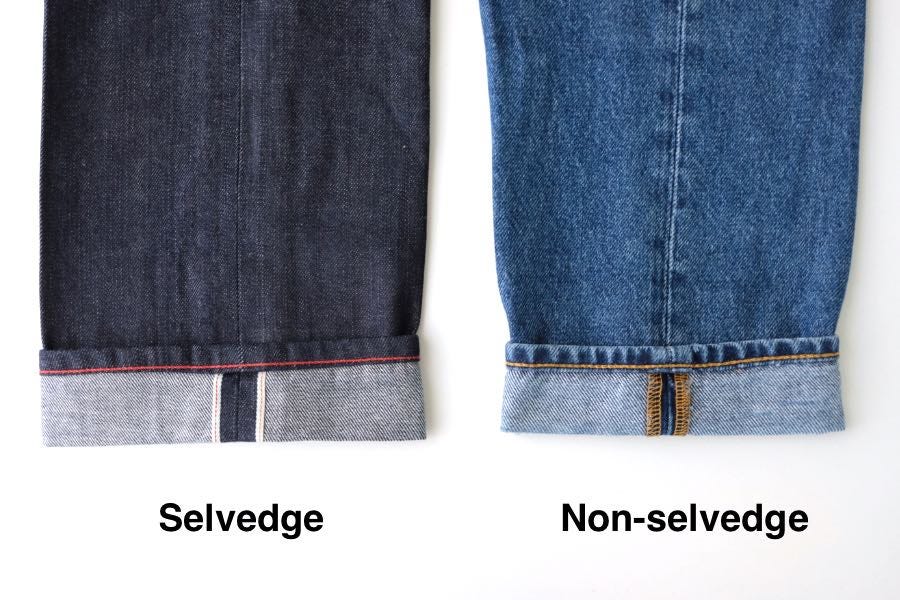
Japanese denim and selvedge denim, while they are not synonymous, are closely associated because most high-end denim produced in Japan is selvedge denim. Selvedge denim is identifiable by a red thread at the edges of the fabric and is clearly visible on the outseams of a pair of jeans when the hems are cuffed. This is like a stamp of quality, recognizable to any denim fanatic.
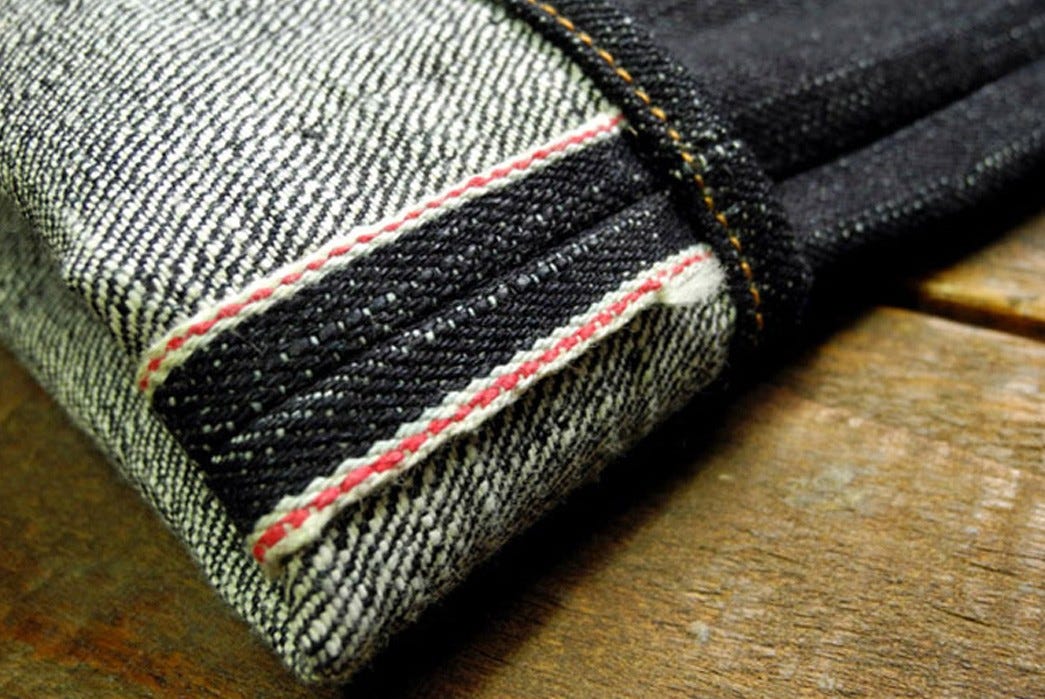
Let’s break down the process of making a pair of blue jeans and uncover what gives Japanese denim its elite status. Without getting too technical, here’s the scoop:
Dyeing
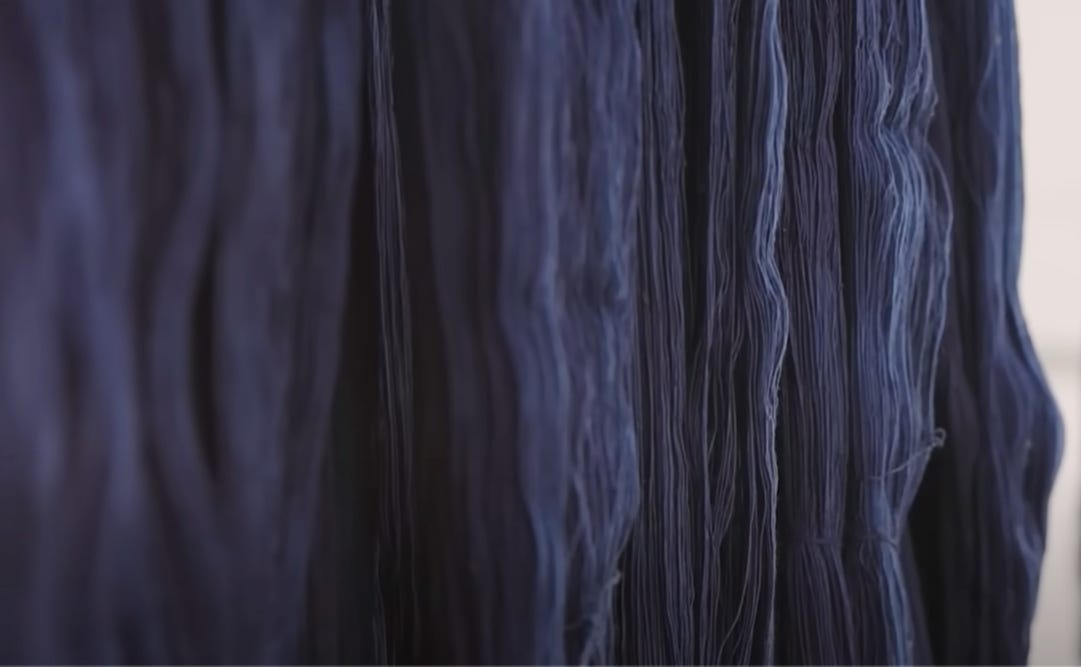
First, the cotton yarns go into a dye bath. Dyeing is both a science and an inexact art. Some natural dyes are easily extracted from plants—onion skins, for example, can be boiled in water to yield a rich yellow without much effort. But indigo is a different story. The leaves of the indigo plant don’t readily release their color and must first undergo a fermentation process to become water soluble.
Once the dye vat is prepared, Japanese dyers begin dipping their yarns—sometimes up to 30 times—in layers, gradually building the rich blue color associated with premium denim. When yarns first come out of the vat, they appear a pale yellow-green; it’s oxidation (not the dye itself) that makes them blue. Yarns are air-dried between dips to maximize oxygen exposure.
In contrast to this ancient method—dating back as far as 6,000 years—is a simpler, modern technique using synthetic indigo, first introduced in 1897. Most jeans today are dyed this way. Synthetic indigo shares many chemical properties with the natural kind and produces a similarly rich blue that fades with wear. However, synthetic dye offers greater control and consistency in color, whereas natural indigo guarantees organic variation, a detail many denim enthusiasts seek out.
Synthetic dye is made with petrochemicals, and environmental concerns have led to a renewed interest in natural indigo. But it comes at a cost—natural indigo is about 10 times more expensive than synthetic, and it's one of the first reasons Japanese denim carries a premium price tag.
Weaving
The second factor is the weaving process. Japanese denim is woven on automated shuttle looms, which produce fabric with self-finished edges that don’t fray—known as selvedge. This fabric is heavy, sturdy, and easily identified by the red thread running along its clean edge. Because shuttle looms produce narrow rolls of fabric (often under a yard wide), more material is needed to make a single pair of jeans.
Weaving on shuttle looms is slow and intentional, unlike modern projectile looms that took over in the 1950s. Projectile looms dramatically increased speed and output by producing wider fabric, but in doing so, sacrificed the selvedge edge. Jeans made from this fabric are often cut across raw edges, which fray unless finished during construction—lacking the clean, classic look of selvedge denim.
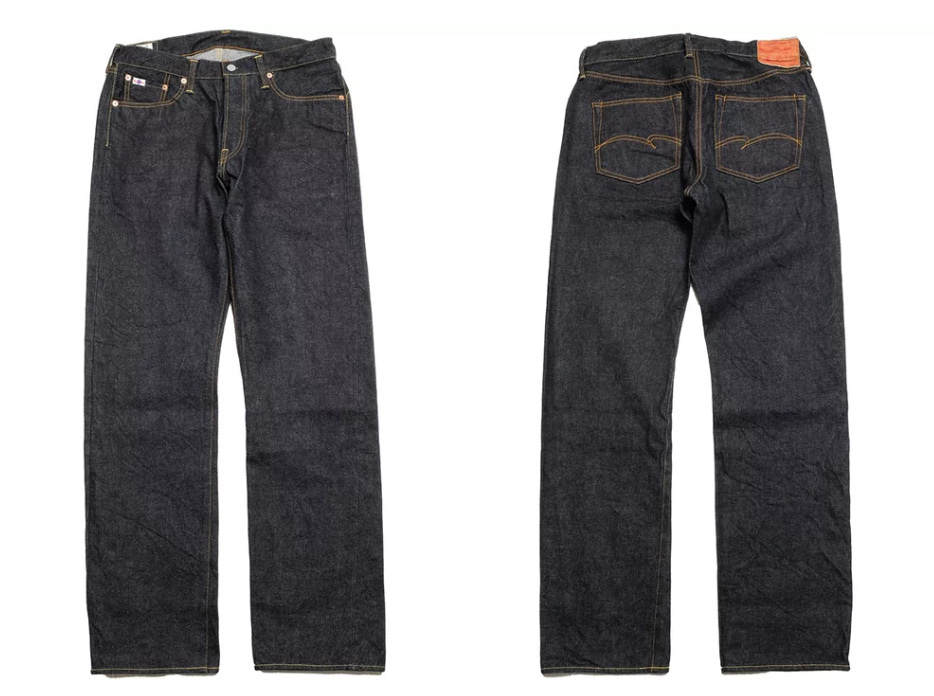
Once dyed and woven, the fabric is cut and sewn into jeans. While there are many notable Japanese denim brands today, the blue jean renaissance in Japan started in Osaka in 1979 with Studio D’Artisan, followed closely by other foundational brands like Evisu, Fullcount, Denime, and Warehouse & Co. This group would later be known as The Osaka 5. Each brand produces its jeans entirely in-house, from dyeing the yarns to punching the final rivets and turning up the hems. Each has its own “look” and style, but what unites them is their commitment to natural indigo dye and quality shuttle-loomed selvedge denim, a heavy durable fabric said to become “like a second skin.”
But how did denim gain such a following in Japan in the first place? Cultures the world over have long loved denim for how it feels American. Following World War II, and born of a longing for freedom and fascination with American culture, an affinity for Levi’s 501s took root in Japan and gave rise to a growing group of collectors obsessed with the most minute details of vintage American denim. Production in Japan began in 1964 in the district of Kojima, just as the U.S. was shifting away from traditional methods—embracing synthetic dyes, projectile looms, and outsourcing labor. Japan didn’t invent denim production, but they picked up the torch America was setting down. For a long time, they were the only ones still making denim the old way: rope-dyed with natural indigo, shuttle-loomed, and sewn with precision. Japanese denim became known not just for refining the craft—but for preserving it.
As Reggie Casual puts it in his YouTube video on the subject, “Japanese appreciation for American styles ensured their continued popularity, even when they were less fashionable in the United States.” Made in Japan now represents quality and integrity. And of course, there is another beautiful Japanese philosophy to complement the craftsmanship of their jeans: wabi-sabi, the perfection of imperfection, acceptance of impermanence, and appreciation for the beauty in change and the aging process. This rings true in the characteristics of denim, ever fading and shaping themselves to the body that wears them. According to Flat Head Denim, “When jeans are made, they’re only 50% done. The other 50% comes from the wearer.”
The Project:
What a perfect segue into my second project of this month: a pair of wide-leg jeans. I realize this contradicts an adamant statement I made last week about skinny jeans for life, but I wanted to give it a shot. I got this denim secondhand and it was already cut; I don’t believe it is selvedge denim and there’s no way to identify it for sure. But it is heavy, sturdy, and no stretch whatsoever.
I used a pattern from a pair of wide-leg slacks I made a while back. These jeans don’t bear most of the traditional details of regular jeans, like the yoke in the back, the curved pockets, or the topstitched back pockets with classic decorative stitching; instead, they have darts and side pockets like a pair of tailored pants, but I did keep the zipper fly and gold thread topstitching you’d expect on a regular pair of jeans. There are some fit issues I’m working on, not the least of which is the proportion of the back pockets—yikes. I’m toying with the idea of making a pleat in the hems, just enough to taper them a little without narrowing the leg too much. I might just buck up and rock the wide cut all the way to the floor. Stay tuned!


Sources!
Videos:
The Secret of Japanese Denim: A MUST-HAVE for Your Wardrobe
True Craftsmanship: The Case for Japanese Denim
Japan | The 501® Jean: Stories of an Original | Episode 4
Why Japanese Denim Is So ExpensiveReading:
What Is Selvedge Denim? A 101 Guide to the Resurgent Old-School Jeans
Japanese Denim: A History of the World's Best Denim
The History Of The Osaka 5
How Japan Copied American Culture and Made it Better
Denim: Chapter Three was fascinating!