

Denim: Chapter One
The first deep dive: a "riveting" history and the unexpected origin story of a jacket I started (and quit) making 5 years ago.

When I started this project, I was prepared to dive into every corner of denim’s vibrant history and report on it diligently. But as I began to sift through the wealth of available information, I had to stop and ask myself: is it really my goal to rewrite Wikipedia or aggregate the entire internet into a single article (which, most importantly, is meant to be fun)? Decidedly no. Instead, I’m narrowing my focus to the most intriguing question I’ve wondered about this week:
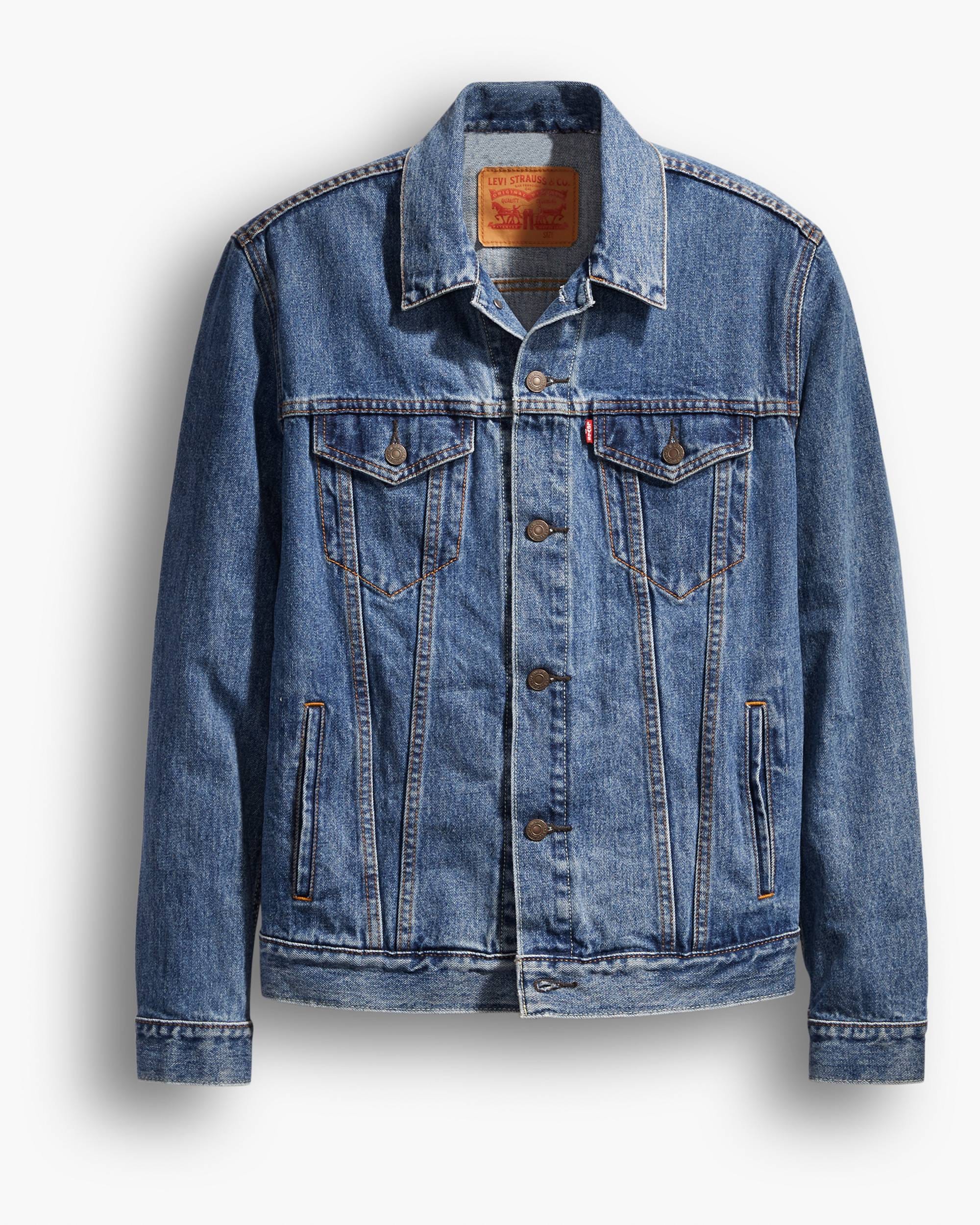
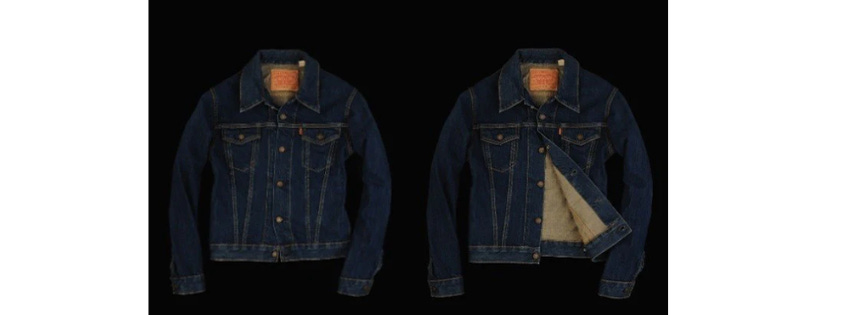
Why do some denim jackets have these two angled vertical seams on the front? And why is this particular style called a trucker jacket?
The history:
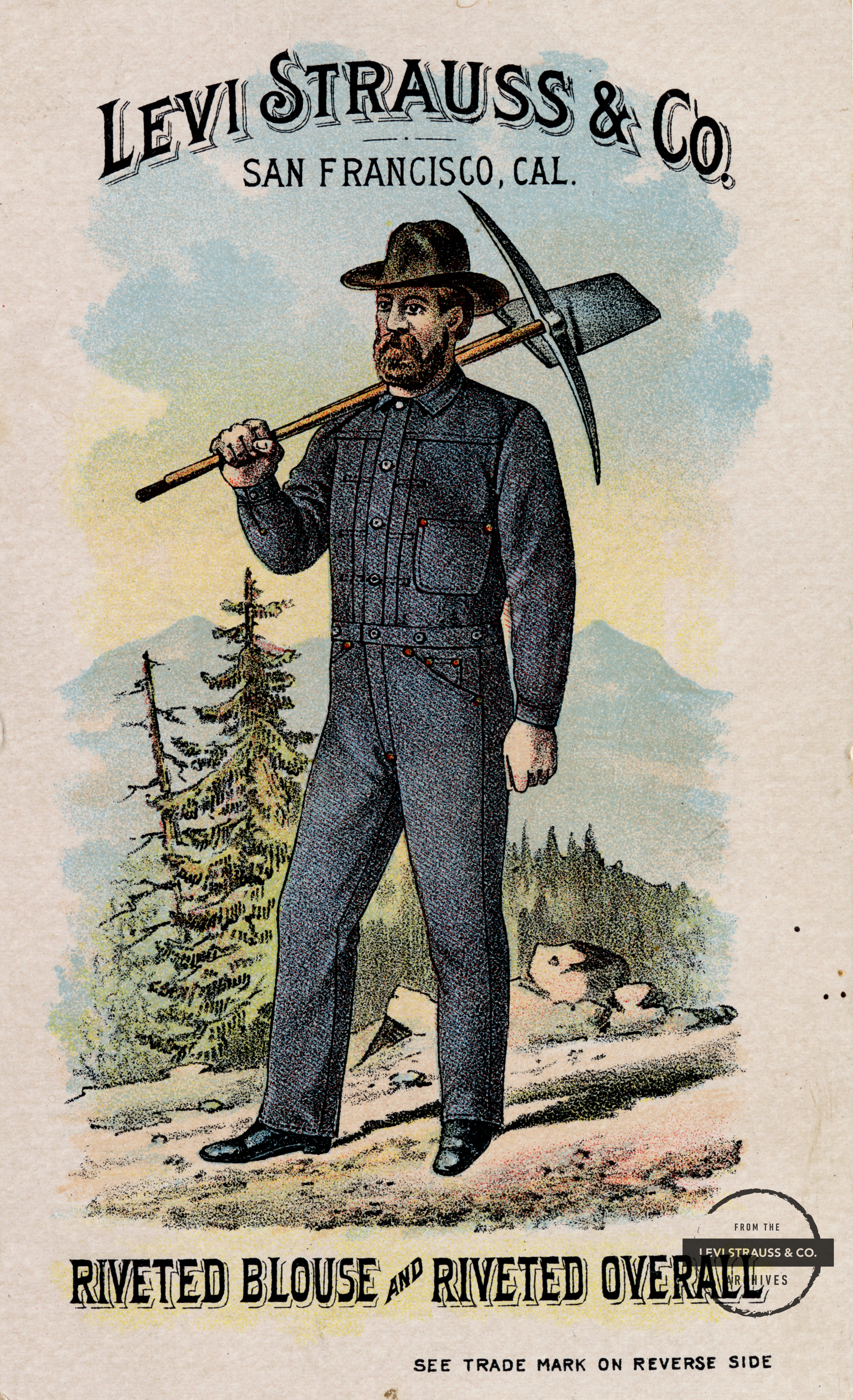
The first denim jacket wasn’t a jacket at all. Introduced by Levi Strauss in 1880*, the “triple pleat denim blouse,” was workwear for rail workers, cowboys, and coal miners during the Gold Rush era. Blouse? The word typically calls to mind a flowy women’s top, but the French word blouse is simply a workman’s smock. A fitting term, then, but it reminds me of a thin, unlined rayon shirt I made several years ago that I referred to as a “studio jacket.”** It defies pretty much everything we think of as “jacket,” the same way heavy denim doesn’t readily lend itself to “blouse.” Like, where can I get a pair of beach trousers or a sleeping bra, am I right? Okay let’s put a pin in this, I’m getting off track.


So, the earliest denim jacket was effectively a heavy shirt with three pleats on each side of the center opening—which could be let out to adjust size—a cinch on the back to further adjust size, two patch pockets at the waist, and riveted cuffs. Levi’s made their name with riveted clothing, as it greatly extended the lifespan of clothing exposed to the harshest conditions, and they held the patent on the rivets. I should mention that there were other denim clothing producers on the scene, like Lee and Wrangler, and their history is a delightful rabbithole in itself, but I’m trying to get to the bottom of the trucker jacket and the v-shaped seams, so I’m going to plod ahead only talking about Levi’s.
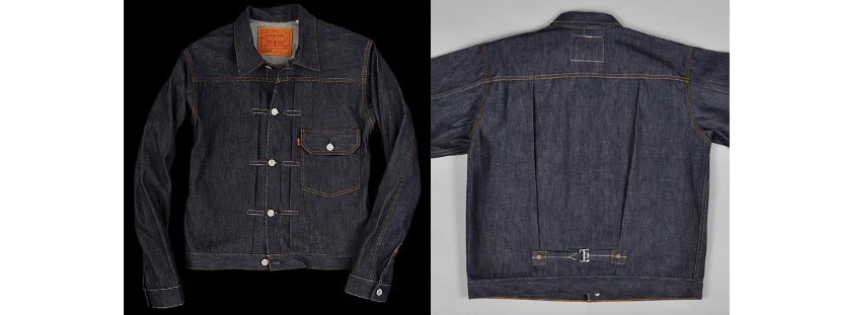
In 1905, Levi’s introduced what is considered the original denim jacket: the Type I. The Type I maintained some details of the blouse—a single pleat each side of center, the back cinch, back pleats, and riveted cuffs—and dropped the waist pockets for a single riveted chest pocket. This jacket was designed for work: slightly shorter in both the body and the sleeves (keep those things out of the way) and boxier for ease of movement. Good for riding horseback, I suspect.
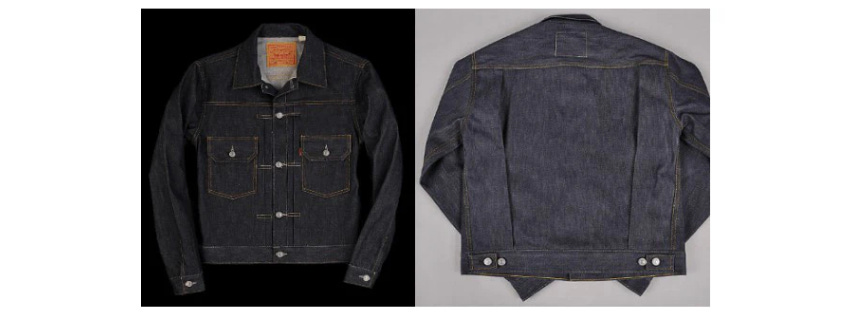
Levi’s didn’t iterate on the theme again until 1953 with the release of the Type II. Features of this jacket include, still, the vertical center front pleats, and that is where the similarities end. The Type II has two pockets, with flaps, and bar tacks now take the place of the pocket rivets. The back cinch is gone in favor of the waist cinch, with two buttons and a tab on each side seam. The jacket is overall a little more fitted; the idea, with all these allowances for size adjustments, was to buy a size up, cinch it down, and have it for life. As I read, I find that the Type II is the jacket of Hollywood and celebrity: Marilyn Monroe, Elvis Presley, James Dean. Post WWII, the denim jacket was integrated into society as a mainstream fashion piece, albeit a rebellious one.
Levi’s came back in 1962 with the Type III, aka: the trucker jacket! This edition eliminates the center-front pleats in favor of those v-shaped seams, creating both an updated look and their most form-fitting jacket yet. It didn’t hit the scene with the "Trucker" name; the style of the cropped fit and pointed pocket flaps was associated with long-haul truckers during the 1980s. Over decades, it’s been embraced by everyone from ranchers and rockstars to artists and fashionistas, constantly reinvented yet somehow always the same. There’s something universal about denim: accessible, versatile, and rebellious. The trucker jacket’s simple lines and thoughtful details make it feel perpetually relevant, a blank canvas onto which generations have projected their identities and stories.
The first project of the month:
It shall be a deadstock denim jacket I started and abandoned 5 years ago. I cut the denim from a pattern I designed in college: a loose-fitting, feminine jacket with three-quarter length sleeves and minimalist seams. When I started this denim jacket, it seemed interesting to use this pattern style to subvert the idea of what a denim jacket should look like—closely fitted to the body, rivets, topstitched seams with gold thread—by making it this tent shape with subtle seams. The denim fabric is irregularly faded and I liked stacking the different saturations together with lines running every direction…but after I got started I found the design was a misuse of the denim, and the fabric seemed too washed out for such a voluminous jacket; I felt like a big blue Easter egg.


But I’m excited to still have it in my stash. Some of my favorite upcycle projects are the glow-ups I offer to things I myself have made (they can’t all be winners). I’ve sketched a few ideas and pulled out my bottomless stash of denim scraps and dead jeans donations (message me if you want to unload your condemned clothing!).
I envision cuffs on the sleeves using more saturated blues, a waistband that pulls in the tent-like shape of this cut, and a traditional collar. I think it’s too late to create trucker seams, but I might play with other traditional details like the waist cinch, and maybe throw on a few patch pockets for fun. I am loving the saturated blues on the washed out deadstock. Stay tuned for the glow-up!


Thank you for joining me for chapter one of denim month! Check back next Tuesday (I know, I’m a few days late with this one) for the answers to my next big question.
*this date is slightly disputed.
**the studio jacket: it was really a shirt that I didn’t want to bother putting buttons or buttonholes on, so it hung open, therefore requiring layers, therefore: jacket.
Oh, and some sources for those inclined:
Videos:
Denim Jacket History: 7 Ancestors You Should Know About
From the Levi’s® Archives: Conserving an 1890s Levis® Sack Coat
The Real Reason Levi’s Jackets Have 2 Lines On The Front.
And reading:
What’s The Difference Between A Trucker Jacket And A Denim Jacket?
Type 1 vs Type 2 vs Type 3 Denim Jackets: Which Is Right for You?
The History Of The Denim Jacket